
JULY 22 2026 - 25 MIN READ
Family Reunion Planning Checklist 2026 with a Free Printable
Table of Contents
Planning a family reunion comes down to one big question: Which date can everyone actually make? This family reunion planning checklist helps you answer that first.
Then it guides you through every step of organizing a successful gathering — from setting a budget and choosing a venue to planning meals, activities, and follow-up.
You’re not alone in wanting to reconnect with loved ones. According to the 2025 U.S. Family Travel Survey, 61% of parents plan trips to visit family and friends. The interest is already there; the challenge is coordinating everyone's schedules and turning good intentions into a well-organized reunion.
|
Quick Summary A family reunion planning checklist helps simplify the entire planning process by keeping tasks organized, budgets manageable, and responsibilities shared. With thoughtful preparation and attention to everyone's needs, you can create a smooth, enjoyable, and memorable reunion that brings family members together and makes the occasion meaningful for all. |
What are the Basics of Family Reunion Planning?
Every successful family reunion starts with four key decisions: people, location, date, and budget. Once you've made these choices, planning the rest of the event becomes much easier.
- People: Estimate how many relatives are likely to attend and choose a main contact for each household or family branch. This makes invitations, RSVPs, and updates much easier to manage.
- Location: Decide where to hold the reunion. Depending on your group size and budget, this could be a backyard, local park, community hall, or destination venue.
- Date: Pick a date and format that works for most people, whether it's a single afternoon, a full day, or an entire weekend.
- Budget: Set an overall budget early and decide how costs will be covered. Your budget will influence your venue, food, activities, and other planning decisions.
Once these basics are in place, you can move on to creating a timeline, choosing activities, organizing meals, and handling the remaining details with confidence.
According to American Express Travel's 2025 Global Travel Trends Report, 58% of Millennial and Gen Z parents plan to travel with extended family. As more families reunite for shared trips and celebrations, planning these four essentials early can help the event run more smoothly.
|
What Does Planning a Family Reunion Actually Involve? Planning a family reunion comes down to coordinating four things: the people, the place, the time, and the money. A family reunion planning checklist helps you organize each one, making the rest of the planning process much easier. |
What’s a Good Family Reunion Planning Timeline?
For most family reunions, start planning 6 to 12 months ahead. For large gatherings or destination reunions, give yourself a year. That lead time gives relatives the runway to save, book travel, and request time off.
Confirm a date that works for everyone, then book the venue and accommodations. If guests are sharing the cost, collect a small confirmation fee before making reservations.
Why so early? Waiting too long can mean higher travel costs, fewer venue options, and lower attendance as family members commit to other plans. The earlier you lock in the day that works for everyone, the more relatives can actually show up.
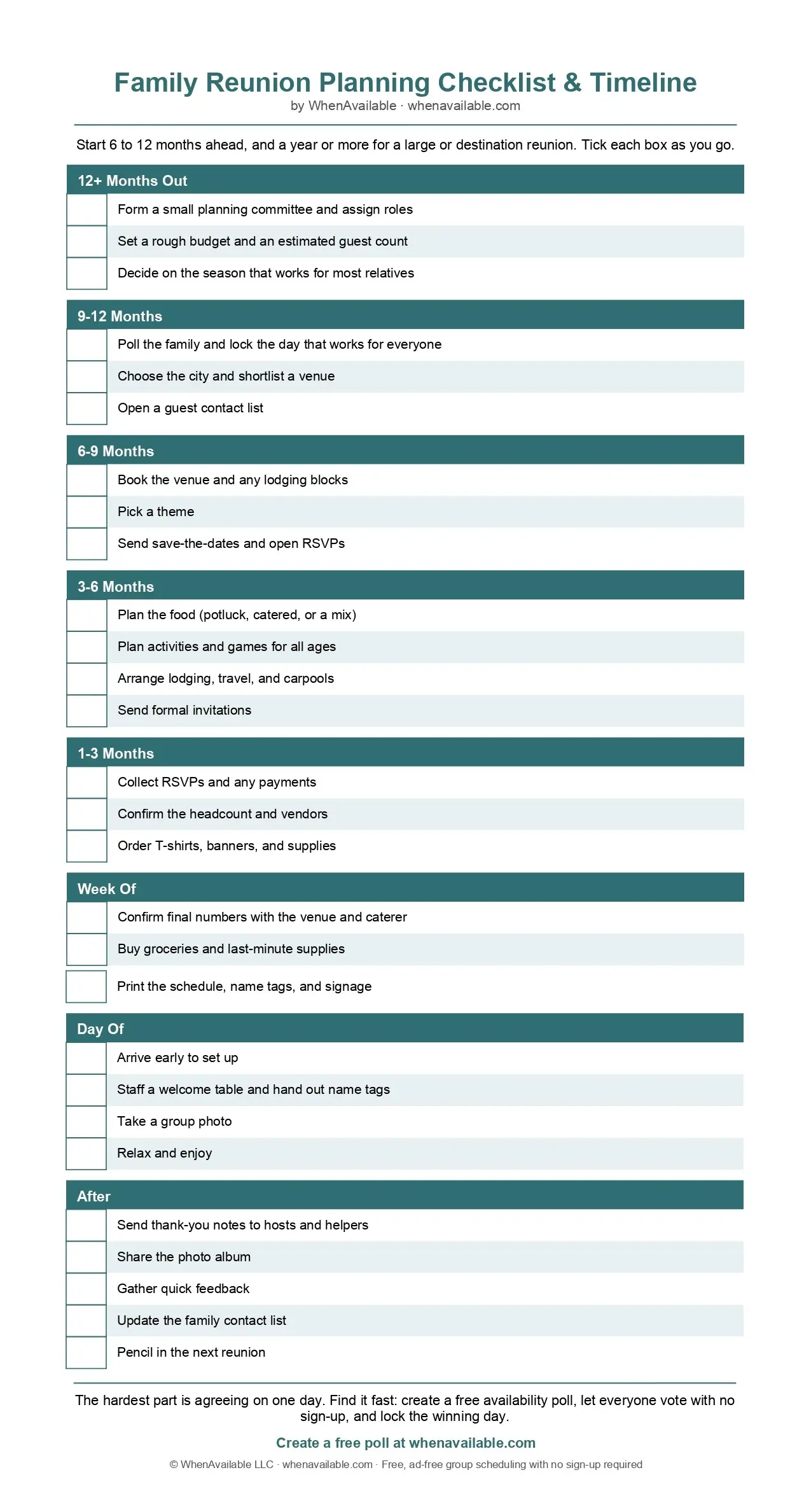
Here's a countdown you can follow from start to finish:
| Phase | What to Do |
|---|---|
| 12+ Months Out | Form a planning committee. Set a rough budget and guest count. |
| 9–12 Months | Poll the family for availability. Lock the day and the city. |
| 6–9 Months | Book the venue and any lodging blocks. Send save-the-dates. |
| 3–6 Months | Finalize your budget, plan food and activities, arrange travel, and send formal invitations. |
| 1–3 Months | Collect RSVPs and payments. Confirm headcount and vendors. |
| Week Of | Confirm details, pack supplies, and share the final family reunion itinerary with everyone. |
| Day Of | Set up early. Greet arrivals. Relax and enjoy. |
| After | Send thank-yous and photos. Note what to repeat next time. |
This family reunion planning checklist timeline works best for both small and larger reunions. International travel, large headcounts, and busy venues all add weeks to every step.
One step trips up almost everyone: agreeing on the day. That's where a group meeting scheduler earns its keep early on.
With WhenAvailable, you can share a few possible dates, let everyone mark their availability, and quickly see which option works best for the group. You can also use it to keep everyone aligned before the planning moves to venues, travel, and invitations.
Ready to Download Family Reunion Planning Checklist
Need a quick checklist you can use right away?
Here is the whole plan in one scannable family reunion planning checklist you can print or save. Work top to bottom, and nothing slips through the cracks. Print this checklist or save it digitally, or you can check off each task as your reunion plans come together.
|
How Far in Advance Should You Plan a Family Reunion? Plan 6 to 12 months ahead for a typical reunion, and a year or more for a large or destination one. Confirm everyone's availability early, so you can secure the best date, venue, and travel options. |
How Should You Plan a Family Reunion? A Step-By-Step Guide
Pick a date, set a planning committee, set a budget, and choose a location to get started. Then, take care of things like food and activities. Send invitations in advance, so everyone can confirm their availability.
Here is a complete family reunion planning checklist.
1. How to Pick a Family Reunion Date That Suits Everyone
The first step in any family reunion planning checklist is finding a date everyone can make. Offer a few possible dates and let everyone mark their availability in one place. That beats chasing replies across a dozen text threads.
WhenAvailable was created to solve the frustration of endless email chains and group chats when trying to agree on a date. Here's a simple approach to finding a time that works for everyone.
List a Few Candidate Weekends
Start by picking 3 to 5 realistic weekend options, enough to give everyone flexibility without making the decision overwhelming. Look at school breaks, holidays, and the people who can't be missed.
Think about Grandma's recovery schedule or the cousins who will need to travel far. Build your shortlist around them first. A little planning here saves a lot of back-and-forth later.
Want help creating an availability poll? Use a tool like WhenAvailable to do it. It doesn’t require the attendees to create an account to mark their availability. Here’s how it could look:
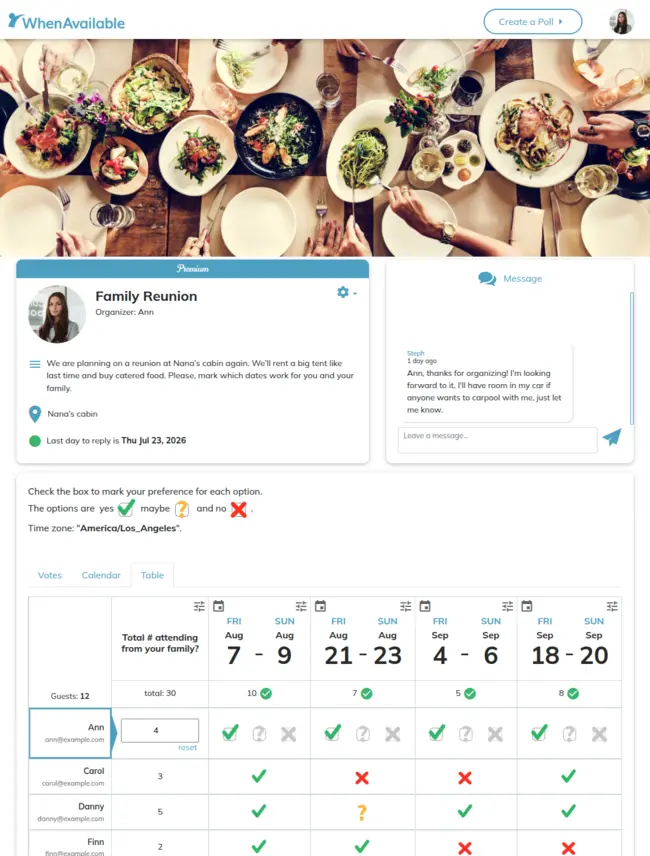
Image via WhenAvailable
Collect Everyone's Availability in One Place
Now share one link via WhenAvailable. Relatives simply mark when they're available, giving everyone a clear view of the best dates. No account, no app to download, which is a relief for older relatives.
See responses as they come in. Built-in time zone detection helps relatives in different locations avoid scheduling mix-ups. WhenAvailable is completely ad-free, and guests vote without signing up.
This open approach removes the usual friction of coordinating large groups and makes it easier to find a meeting time that works for everyone. It also makes it easy to schedule with multiple people at once.
One user, Sonja from Reykjavík, Iceland, summed up the experience well: "Super user-friendly and makes identifying the winning date really simple."
You can create a poll in a couple of minutes. If your family spans countries, the built-in time zone support handles the math for you.
Ready to choose your reunion date? Use WhenAvailable to create a free poll and share it with your relatives to quickly find a day that works for everyone.
Lock In the Winning Day and Share It
Once everyone has responded, choose the date that works for the most relatives while considering any must-have attendees. Then confirm it so it's official.
Share the confirmed date with everyone in one message, along with any next steps, such as venue updates or RSVP deadlines. No more "Wait, which weekend was it?"
2. Set Up Your Family Reunion Planning Committee
Every family reunion planning checklist should include a small planning committee. Form a small planning committee and give each person a clear job. Dividing responsibilities helps prevent missed tasks, keeps planning on schedule, and makes the reunion less stressful for everyone involved.
A handful of willing relatives makes the work light. Here's a simple way to split it up.
| Role | What They Own |
|---|---|
| Chair / Organizer | Overall plan, timeline, venue coordination, and keeping everyone on track |
| Treasurer | Budget, collecting money, and tracking spending |
| Food Lead | Menu, catering, or potluck assignments, and dietary needs |
| Activities Lead | Games, outings, and the reunion schedule |
| Communications Lead | Invitations, updates, and the group's event scheduling |
| Lodging & Travel Lead | Hotel blocks, directions, and travel tips |
Match each job to the person who'll enjoy it. Your foodie aunt loves the menu. Your spreadsheet cousin loves the budget. Then trust them to run with it, check in regularly, and share updates so everyone stays aligned as plans come together.
3. Build a Family Reunion Budget (and Decide Who Pays)
Every family reunion planning checklist should start with a total budget. List every expected expense, including the venue, food, decorations, activities, travel, and any shared supplies. Then split it fairly across the family. That order keeps surprises out of the picture.
Agreeing on the budget early makes it easier to decide who pays for what and helps avoid confusion or awkward conversations later.
What to Budget For
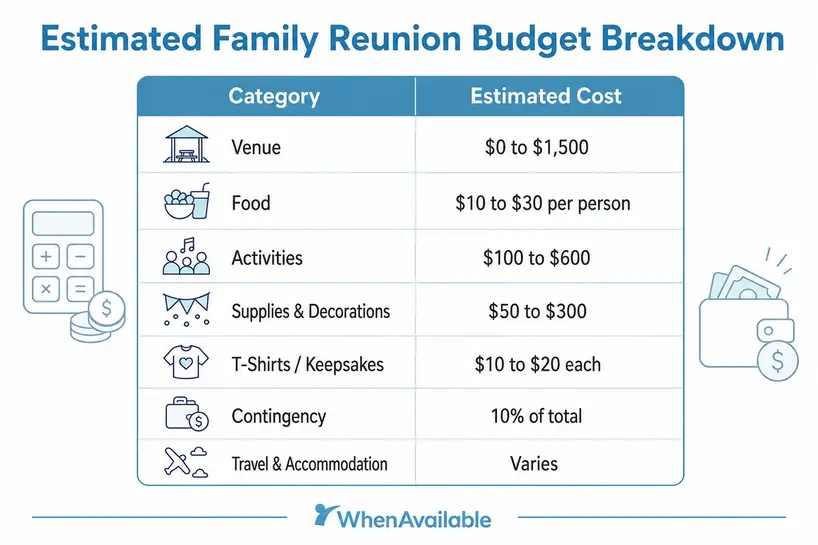
Here are the usual costs to plan around. These are rough estimates, not fixed prices, so adjust them to your family's size and plans.
| Category | Estimated Cost | Notes |
|---|---|---|
| Venue | $0 to $1,500 | A park or backyard can be free; halls cost more |
| Food | $10 to $30 per person | A potluck trims this a lot |
| Activities | $100 to $600 | Games, rentals, or a group outing |
| Supplies & Decorations | $50 to $300 | Tableware, banners, name tags, signage, and activity supplies |
| T-Shirts / Keepsakes | $10 to $20 each | Optional, but a fun memento |
| Contingency | 10% of total | A cushion for the things you forgot |
| Travel & Accommodation | Varies | Flights, fuel, hotels, or shared vacation rentals for destination reunions. |
Who Pays and How to Split It Fairly
Decide how to divide the total. You can charge per family or per adult. Per adult tends to feel fairer when family sizes vary a lot. You can also separate optional expenses, such as keepsakes or paid activities, so only the relatives who choose them contribute.
For bigger families, try a sliding scale so nobody's stretched thin. Collect everyone's contributions into a single shared fund or through a single payment organizer to keep tracking simple. Pick one method and say it plainly up front.
Be transparent about money. Per AARP's 2025 Travel Trends, cost is the top barrier to travel at 45%. Clear numbers help everyone say yes.
4. Choose a Location and Venue
The right venue should be easy for everyone to reach, comfortably fit your group, stay within budget, and offer the facilities your family needs. Those three factors matter most. Once you've chosen the right venue, it's much easier to plan invitations, catering, activities, and travel.
How to Choose the Right Spot
- Start with travel time. A central location keeps drives and flights reasonable for most people.
- Check capacitynext. Your venue should hold everyone comfortably, with room to mingle and eat.
- If you plan an outdoor gathering, line up an indoor backup for rain or heat. Weather changes fast.
- Consider accessibility too. Older relatives appreciate easy parking, level paths, and seating nearby.
Once you've found the right venue, book it as early as possible to secure your preferred date and avoid limited availability. For a destination reunion, group trip planning apps like WhenAvailable help you compare options and keep everyone in the loop.
Popular Venue Types
- A relative's backyard for a relaxed, low-cost gathering
- A public park or pavilion with space for kids and games
- A campground or cabin for an outdoorsy, overnight feel
- A vacation rental that fits several households under one roof
- A resort with activities and meals handled for you
- The family's hometown, close to history and familiar faces
5. Manage Invitations and RSVPs
You've done the hard part by settling on a date and venue. Now it's time to let everyone know the plan, keep track of who's coming, and make sure no one misses an important update. A little organization now will save you plenty of last-minute scrambling later.
If you used WhenAvailable for polling, you can easily track attendees' votes and availability.
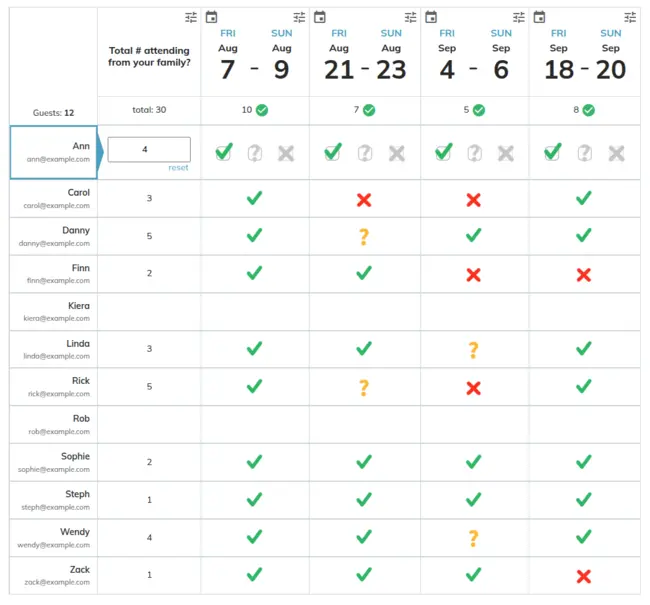
Image via WhenAvailable
Finalize Your Guest List
By now, you should already have a guest list from your availability poll. Review it, remove any duplicates, update contact details, and group guests by household or family branch. This makes invitations, RSVPs, and seating much easier to manage.
Send Save-the-Dates
Once your date and venue are confirmed, send a save-the-date so everyone has plenty of time to arrange travel, request time off, and mark their calendars. The earlier you send it, the easier it is for relatives to plan ahead.
Send Invitations and Track RSVPs
Send your invitations with all the key details, including the date, location, schedule, and RSVP deadline. As responses come in, keep a running headcount and confirm any dietary requirements, accessibility needs, and plus-ones so you can finalize food, seating, and activities.
6. Plan the Food
Will you do a potluck, use a caterer, or use a mix of both? Settle that first, then assign dishes and cover everyone's dietary needs. That keeps the meal stress-free and inclusive.
Use your confirmed RSVP count to estimate portions so you have enough food without creating unnecessary waste.
Food brings people together, so a little planning goes a long way. For family reunion food ideas, lean on the dishes your relatives are already known for.
Here’s how to plan for food at a family reunion.
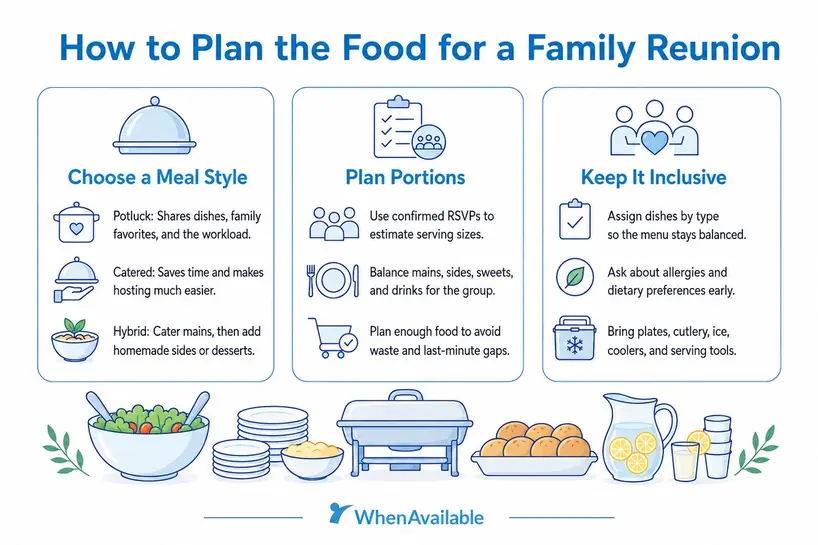
Potluck vs Catered vs Mixed
A potluck spreads the work and cost across everyone. It feels personal, though it takes coordination. Create a shared sign-up list so everyone can see what's already covered before choosing a dish.
Catering costs more but frees you from cooking and cleanup. You get consistency and time with your family.
A hybrid often hits the sweet spot. Hire a caterer for the basics, then let relatives bring sides and desserts, much like a weekend BBQ where everyone pitches in.
Assignments and Dietary Needs
Have people sign up by dish or category. That way you don't end up with twelve potato salads and no dessert.
Note dietary needs early. Ask about allergies, kids' food, and vegetarian, halal, or kosher options so everyone has something to enjoy. Don't forget drinks, serving utensils, coolers, ice, and extra plates and cutlery when planning your menu.
7. Plan Activities and Games for All Ages
Plan a mix of activities so that every age group, from toddlers to grandparents, has something to enjoy. The best reunions balance loud, active fun with quiet moments to talk. Aim for activities that encourage different generations to spend time together and create lasting memories.
You don't need a packed schedule. A few well-planned activities give everyone options, while leaving plenty of free time for conversations and spontaneous moments.
Here’s how to choose activities for your family reunion.
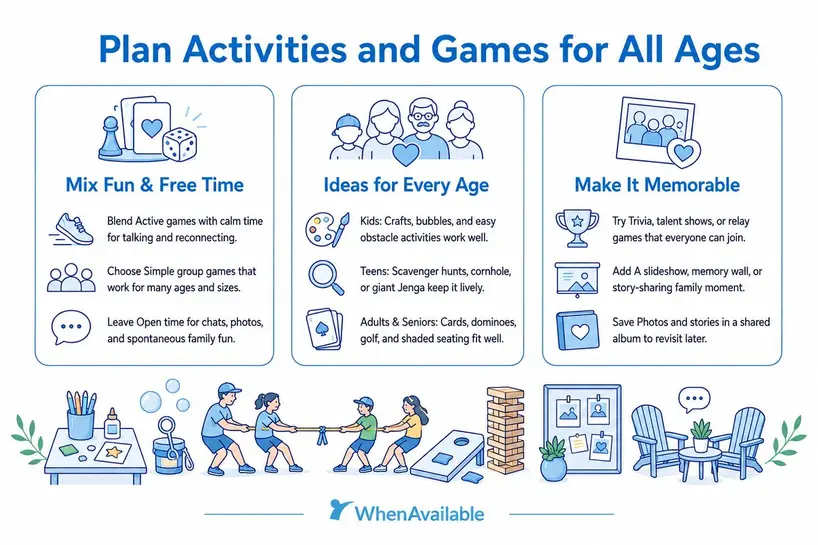
Icebreakers and Group Games
The best family reunion games are easy to join, work for different group sizes, and encourage everyone to participate. They melt the awkwardness when relatives haven't seen each other in years.
- A name game to help cousins and in-laws connect
- Family trivia about your shared history and inside jokes
- A scavenger hunt that sends teams roaming the venue
- A talent show where every branch performs something
- Classic relay races or a friendly tug-of-war
Mix at least one calm game with one active one. That way, nobody feels left out.
Activities by Age Group
Offer a few choices at once so people drift toward what they love. Here's a quick guide by age.
- Kids: a craft table, bubbles, a kiddie pool, or a simple obstacle course
- Teens: a family photo scavenger hunt, cornhole or giant Jenga tournament, or a trivia challenge about family history
- Adults: a round of golf, a card table, or a recipe tasting competition
- Seniors: shaded seating, dominoes, and plenty of space to chat
For the readers in the family, set up a book club-style discussion about a shared favorite. It's low-key and sparks great conversation.
Activities that Create a Family-History Moment
Build in one moment that honors where you all come from. This is often the part people remember most.
Try a slideshow of old photos, a memory wall, or recorded stories from your oldest relatives. Ask grandparents to share one favorite tale. Record these stories or gather written memories into a shared family album that everyone can revisit after the reunion. Those voices become treasures later.
8. Choose a Theme and Buy Keepsakes
A theme ties the day together and makes it easy to plan decorations, shirts, and photos. Pick one early, and every other choice gets simpler. It also gives the whole group a shared sense of fun before anyone arrives.
Here’s a guide to help you out.
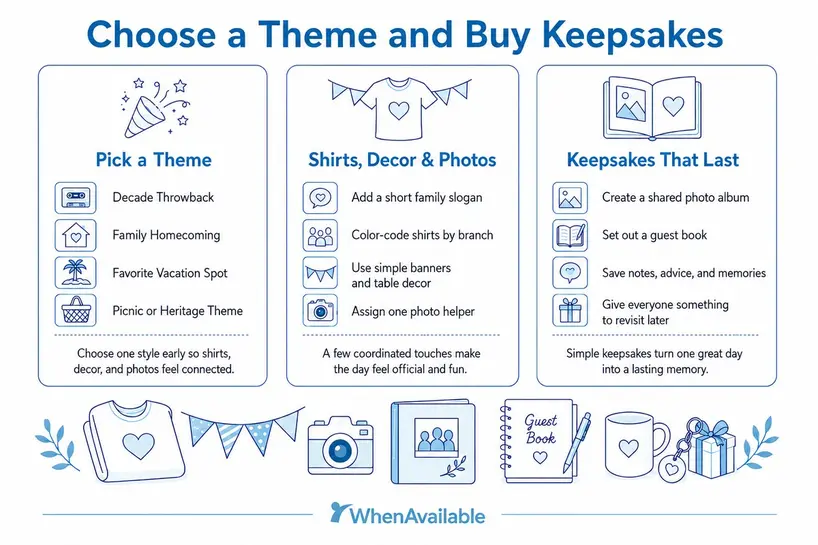
Pick a Theme
Choose something that fits your family's personality. A few family reunion ideas to spark yours:
- A decade theme, like a '70s throwback with the music and colors to match
- A family-crest or "homecoming" theme that celebrates your roots
- A vacation theme built around a place you all love
- A picnic or backyard barbecue theme with casual outdoor games
- A heritage theme that celebrates your family's culture or traditions
Add a short, catchy slogan for the shirts, like "Same Roots, New Memories" with your family name. It makes the day feel official.
Buy T-Shirts, Decor, and Keepsakes
Keepsakes turn a fun afternoon into a memory people keep for years. Focus on a few simple touches.
- Custom T-shirts, color-coded by branch of the family, so groups spot each other
- Simple banners and easy table decor in your theme colors
- A designated photographer to catch the candid moments
- A shared photo album where everyone can add their pictures to
- A guest book where relatives can write messages, memories, or advice for future generations
9. Lodging, Travel, and Day-Of Logistics
Sort out where people stay, how they get there, and how the day actually runs. A little planning here prevents most of the day's headaches.
Planning these details ahead of time helps everything run smoothly, so you can spend more time with your family instead of solving last-minute problems.
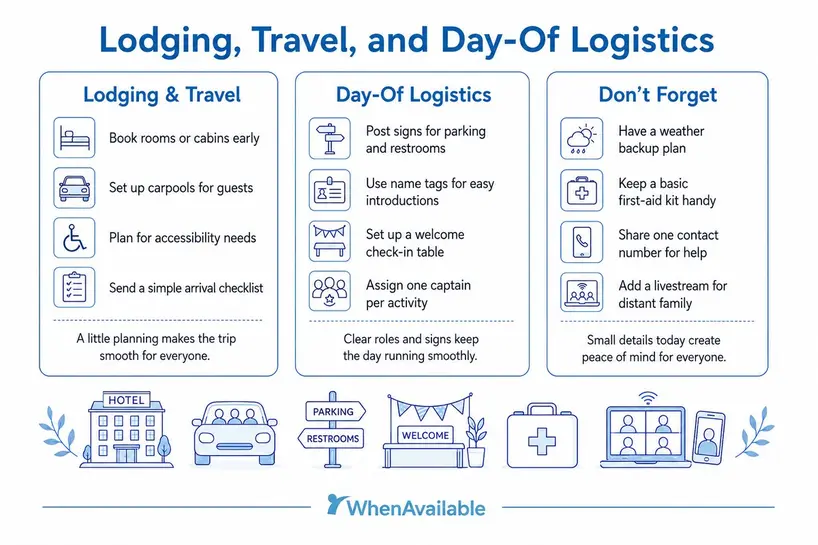
Lodging and Travel
Lock in the basics early, before prices climb or rooms fill up. Out-of-town relatives will thank you.
- Block hotel rooms or reserve a cabin cluster well ahead of time
- Organize carpools so nobody navigates a new area alone
- Keep accessibility in mind for relatives with mobility needs
Share a simple family reunion planning checklist, so nobody has to guess about timing. Share it a few days before the reunion so everyone knows when to arrive and what to expect.
Day-Of Logistics
Set up a few systems so the day runs without one person doing everything. These small touches make a big difference.
- Clear signage pointing to parking, restrooms, and the main area
- Name tags, which help when second cousins meet for the first time
- A welcome table where people check in and grab their shirts
- A "captain" for each activity so no single person runs ragged
Don't Forget
A few easy-to-miss items can save the whole event. Run through this short list before the big day.
- A weather backup, like a tent or indoor space, for outdoor plans
- A basic first-aid kit for scrapes and headaches
- A shared contact number or emergency contact for guests who need help finding the venue
- Any permits or event insurance a public venue requires
- A livestream or video call so relatives who can't travel still join in
Want a fully remote option instead? You can host a virtual family reunion and bring everyone together from anywhere.
|
Key Steps Summary:
|
What Should You Do After the Reunion?
The final step in your family reunion planning checklist is following up after the event.
- Start with thank-you notes. A quick message to hosts, helpers, and travelers goes a long way.
- Then share the photo album. One link lets everyone relive the day and add their own snapshots.
- Send a short feedback note too. Ask what people loved and what they would change next time.
- Update your family contact list while details are fresh. New addresses, emails, and babies all belong there.
- Finally, schedule the next gathering. A quick poll makes settling the next day painless, so you can find a meeting time without the endless thread.
|
What Should You Do After a Family Reunion? Send thank-you notes, share the photos, and ask for quick feedback. Update your contact list, then pencil in the next gathering while everyone is still excited. |
FAQ
1. How far in advance should you plan a family reunion?
A family reunion planning checklist works best when you start planning 6–12 months in advance. That window gives relatives time to save, request time off, and book travel. Smaller, local gatherings can come together in three to six months.
2. What is the first step in planning a family reunion?
The first step is deciding who's organizing the reunion and checking everyone's availability to find a date that works. Once you've settled on a date, form a small planning committee, set a budget, and divide responsibilities.
3. How do you choose a day that works for everyone?
Send a quick availability poll with a few date and time options. Everyone marks their availability, making it easy to choose the best date for the group. It beats chasing replies across a long group email thread.
4. How much does a family reunion cost, and how do you split it?
Your family reunion planning checklist should include a detailed budget. Many families split expenses with a flat fee per household or per adult. A shared spreadsheet keeps contributions clear and fair.
5. How long should a family reunion last?
Most family reunions run from one full day to a long weekend. A single day suits local crowds, while two or three days fit relatives who travel far. Match the length to your budget and how far people come.
6. What are good family reunion activities and games for all ages?
Choose a mix so every generation joins in. Think relay races and a scavenger hunt for kids, plus trivia, cards, or a story circle for grandparents. A group photo and a shared meal pull everyone together.
7. How do you plan a family reunion on a budget?
A family reunion planning checklist helps you control costs from the start. Make the meal a potluck, and ask families to bring their own chairs and games. Free planning tools handle the coordination without any fees.
8. How do you set up a family reunion planning committee?
Invite a handful of reliable relatives across different branches and generations. Give each person one clear role, like venue, food, or communication. Meet by video every month or two to stay aligned and share progress.
9. How do you include relatives who can't travel?
Bring the reunion to them with a video call during the main gathering. Share a live photo album, record short greetings, and mail a small keepsake. A hybrid setup keeps faraway relatives part of the day.
Conclusion
A successful reunion starts with the right date. Once that's decided, organizing the venue, activities, and guest details becomes much easier.
A clear family reunion planning checklist and timeline are what keep the whole thing stress-free. You always know the next task, so nothing piles up at the last minute.
You've got this, and your family will remember the effort for years. The hardest part is simply settling that one day everyone can make.
When you're ready to find a date everyone can make, create a free availability poll with WhenAvailable and start collecting responses in minutes.
Also, use our free family reunion planning checklist to make things easier for yourself: